

1
Jaw angle
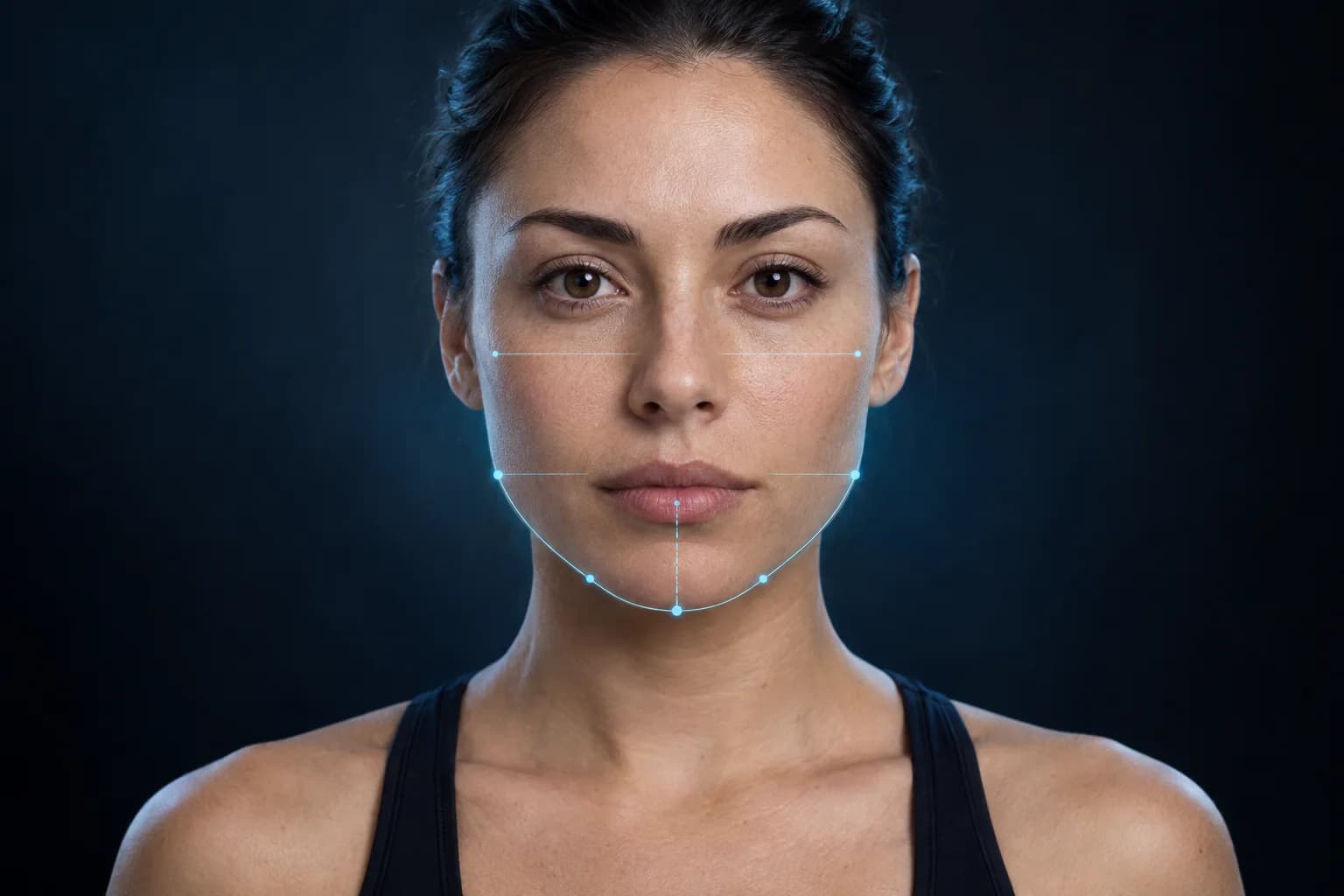
The visible lower-face angle formed by the jaw landmarks and chin.
Free · no signup · private in-browser
Upload one level, front-facing photo to check jaw angle, width, chin support, lower-third balance, and jaw contour.
Try it now
Keep the camera level and show both jaw corners, your chin, cheeks, and upper neck with a relaxed, closed-mouth expression.
Private jawline scan
Use a front-facing photo that shows your chin, jaw edge, and neck clearly.
Quick private upload. Jawline analysis starts after the next step.
Best results: face forward, relaxed jaw, visible neck and chin.
🔒 Private: core analysis stays on your device. Your photo is shared only if you separately opt in to an eligible AI photo feature.

Example framing only, not a target look.
For the best results:
Results are based on lower-face structure, jawline cues, and proportions.
Need more details? See FAQ
The analyzer focuses on lower-face geometry visible in a front-facing photo: jaw angle, jaw-to-cheekbone width, chin support, lower-third height, and bilateral contour agreement.
Use a level camera, relaxed posture, and even frontal light. Looking up, pushing the chin forward, turning the head, or using a close selfie can change the visible outline without changing your underlying structure.
Frame
Keep both jaw corners, the chin, cheeks, and upper neck visible.
Measure
The analyzer compares multiple lower-face angles and proportions.
Interpret
Read the score with the photo conditions and selected goal in mind.
Multi-signal lower-face analysis
The analyzer maps facial landmarks and combines several jaw-local measurements. One sharp angle cannot erase weak chin support, and one uncertain cue should not define the category.
Jawline references can change with the selected balanced, masculine, or feminine presentation goal. The detected landmarks do not change.
The visible lower-face angle formed by the jaw landmarks and chin.
Jaw width compared with cheekbone width, not width in isolation.
A photo-based combination of chin position, width, and vertical height.
How the mouth-to-chin region fits the height of the visible lower face.
Whether the left and right jaw contours support a reliable strong result.
Missing or unreliable evidence adds uncertainty. The score remains an estimate from one two-dimensional image, not a direct anatomical measurement.
Full methodologyControl the capture
A camera flattens a three-dimensional lower face. Remove these common photo effects before treating a score difference as a structural change.
One jaw side looks wider while the other is visually compressed.
Keep both ears and cheek boundaries comparably visible.
Changes the jaw-neck edge and apparent lower-third height.
Keep the eye line level and your head in a relaxed neutral position.
Can enlarge the center of the face and distort jaw-to-cheek width.
Move farther from the camera and crop afterward.
Creates an artificial sharp edge on one side and hides the other.
Face soft, even light with both jaw edges visible.
Can conceal or redraw the visible contour used by the photo.
Keep hair off the jaw and use a clear, evenly groomed outline.
Interpretation guide
Read the number as a summary of visible lower-face agreement in this photo—not a diagnosis or a demand for a wider, sharper jaw.
The number summarizes several jaw and chin measurements from one image. It is not your overall face score.
The same geometry can be compared with balanced, masculine, or feminine presentation references.
A 2D photo cannot diagnose skeletal projection, dental alignment, airway issues, or jaw-joint health.
Compare results only when camera distance, head position, expression, lighting, and grooming are similar.
The analyzer estimates how the chin is supported by visible front-view relationships. Precise forward projection requires a standardized side view or three-dimensional clinical imaging.
Actionable without overpromising
Separate reversible presentation changes from anatomy. That keeps a photo score useful without turning it into medical advice.
A level camera, relaxed neck, and neutral chin position produce a more honest baseline before any styling change.
Side volume, beard length, and edge placement can change the apparent width, length, and clarity of the lower face.
Soft contour and even lighting can clarify the edge without pretending to alter the underlying jaw structure.
Pain, bite problems, breathing concerns, or questions about structural treatment belong with a qualified clinician—not a photo score.
Common questions
The analyzer detects visible lower-face landmarks and compares jaw angle, jaw width relative to the cheekbones, chin height and support, lower-third balance, and left-right jaw contour. It combines those cues into a photo-based jawline score.
Yes. The free result includes your jawline score and three available checks: projected jaw angle, jaw width and border inclination, with photo guides and explanations. Chin height and chin share are included in the optional paid report, alongside additional facial categories and personalized priorities.
The core jawline analysis runs in your browser, so the photo stays on your device for that scan. It is shared only if you later opt in to an eligible AI photo feature.
Use a level front-facing photo for this test. It is designed to compare lower-face width, angle, balance, and chin proportions in the front view. A side profile may be useful for a separate clinical or profile assessment, but it is not the input this score is calibrated for.
It can consistently describe visible landmark geometry in a suitable photo, but it cannot directly measure bone, soft-tissue depth, bite alignment, or three-dimensional chin projection. Camera distance, posture, head angle, lighting, expression, hair, and facial hair can all change the reading.
A defined jawline usually combines a visible lower-face edge, adequate chin support, a jaw angle and width that fit the rest of the face, and clear separation between the jaw and neck. No single measurement determines the whole impression.
Photo setup, posture, hairstyle, facial-hair grooming, and makeup can change lower-face framing and visible definition. Body composition can also affect soft-tissue definition, but health changes should not be pursued solely to move a face score. Structural or bite concerns need qualified professional assessment.
No. The analyzer uses contextual reference bands rather than rewarding unlimited sharpness or width. A lower face can be tapered, broad, soft, or angular and still work well when its components agree with each other and the selected presentation goal.
It can. Unlike facial symmetry, jaw angle, width, and chin references can vary with a masculine, feminine, or balanced presentation goal. The measured landmarks stay the same, while the comparison context changes.