
How to Take a Good Face Photo for Accurate Analysis
3 min read
By Lookmax Analyzer Team — Updated Feb 25, 2026
Taking a clean, neutral face photo is the easiest way to get a realistic evaluation of your features. This guide covers everything you need — from angle to distance to lighting.
The truth: Angle and head position matter the most. Distance from camera, lighting, background, and composition help make your features clearer — but they won't break the analysis.
Why your photo matters#
- facial symmetry
- proportions (facial thirds, golden ratio)
- jawline visibility
- cheekbone structure
- eye position
- overall profile balance
The model works reliably even with average lighting or a simple background. But your angle, distance from camera, head position, and expression dramatically change how your features appear.
This guide shows the simplest setup for clean, accurate, repeatable results.
Why most face photos are inaccurate#
Most people take photos wrong without realizing it. Here's why:
Holding your phone 20cm from your face activates the ultra-wide lens by default. This makes your nose appear larger and distorts jaw shape.
→ See recommended distance settings below
Tilting your chin up makes your jaw look weaker. Tilting down hides your chin. A level head is essential for consistent measurements.
When the camera is too close, one side of your face appears larger than the other due to perspective distortion. This can make mild asymmetry look severe.
Overhead lights create shadows under your eyes and jaw. Diffused window light shows your true bone structure.
The good news: these are all fixable in seconds. Below is exactly how to do it.
Angle (most important)#
Angle affects everything: jawline shape, facial width, symmetry, and perceived proportions.
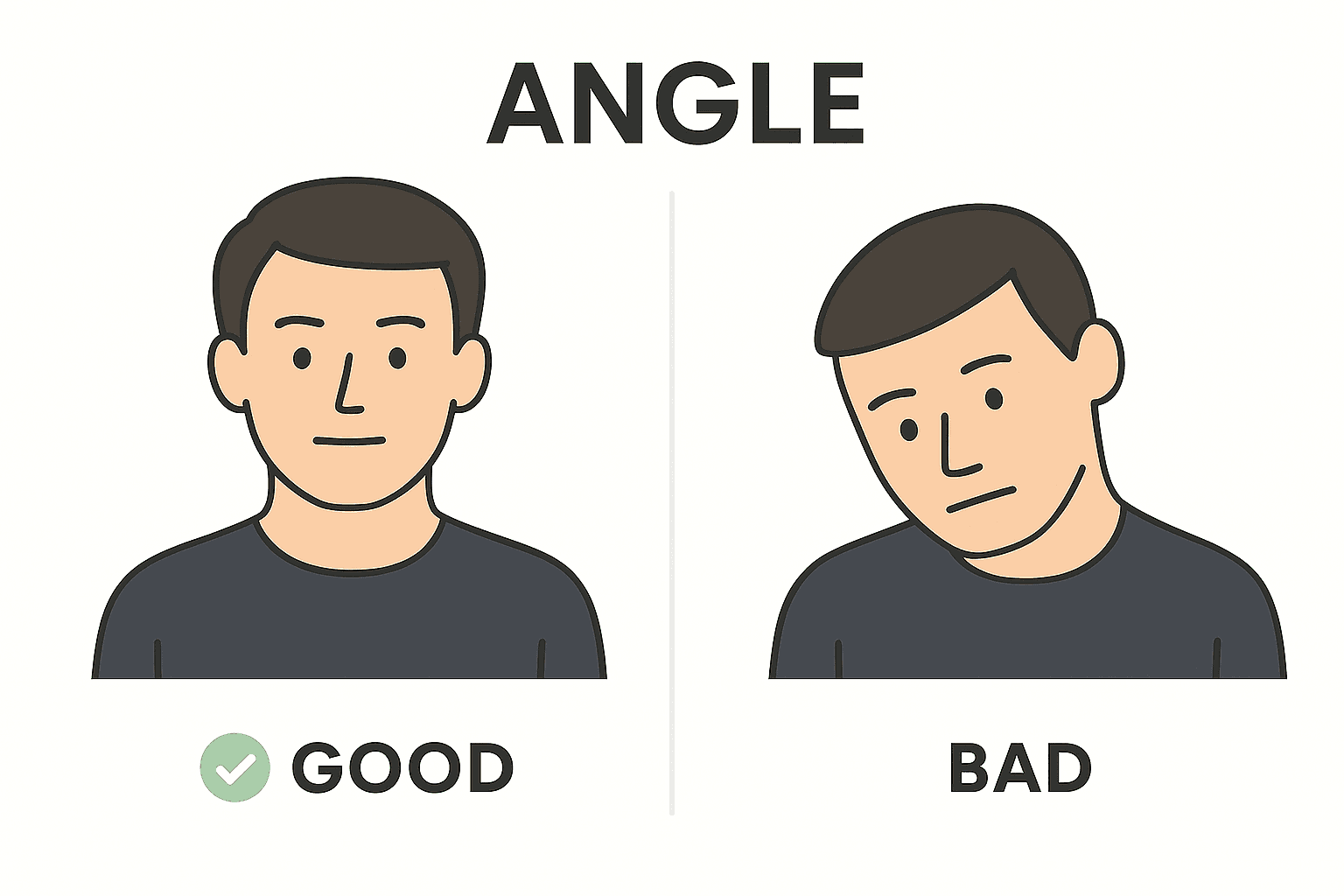
Keep the camera at eye level. Tilting up, down, or sideways distorts proportions the most.
- Keep your head level
- Look directly at the camera
- Hold your phone at eye height
- Tilting your head
- Chin up / chin down
- Looking sideways
This is the #1 factor for accurate evaluation.
Distance from camera#
This is the most commonly overlooked factor. Holding the camera too close creates wide-angle distortion that makes your nose look bigger and jaw smaller.
At this distance, your facial proportions are accurate to real life.
Professional portrait photography typically uses 50–85mm equivalent focal lengths to preserve natural facial proportions. Using your phone at 1x zoom approximates this range and reduces distortion.
- Hold phone at arm's length (~50-70cm)
- Use 1x zoom (not ultra-wide 0.5x)
- Avoid holding camera very close for selfies
- Center your face in frame
- Using front camera held too close (especially with arm extended)
- Default wide-angle selfie mode
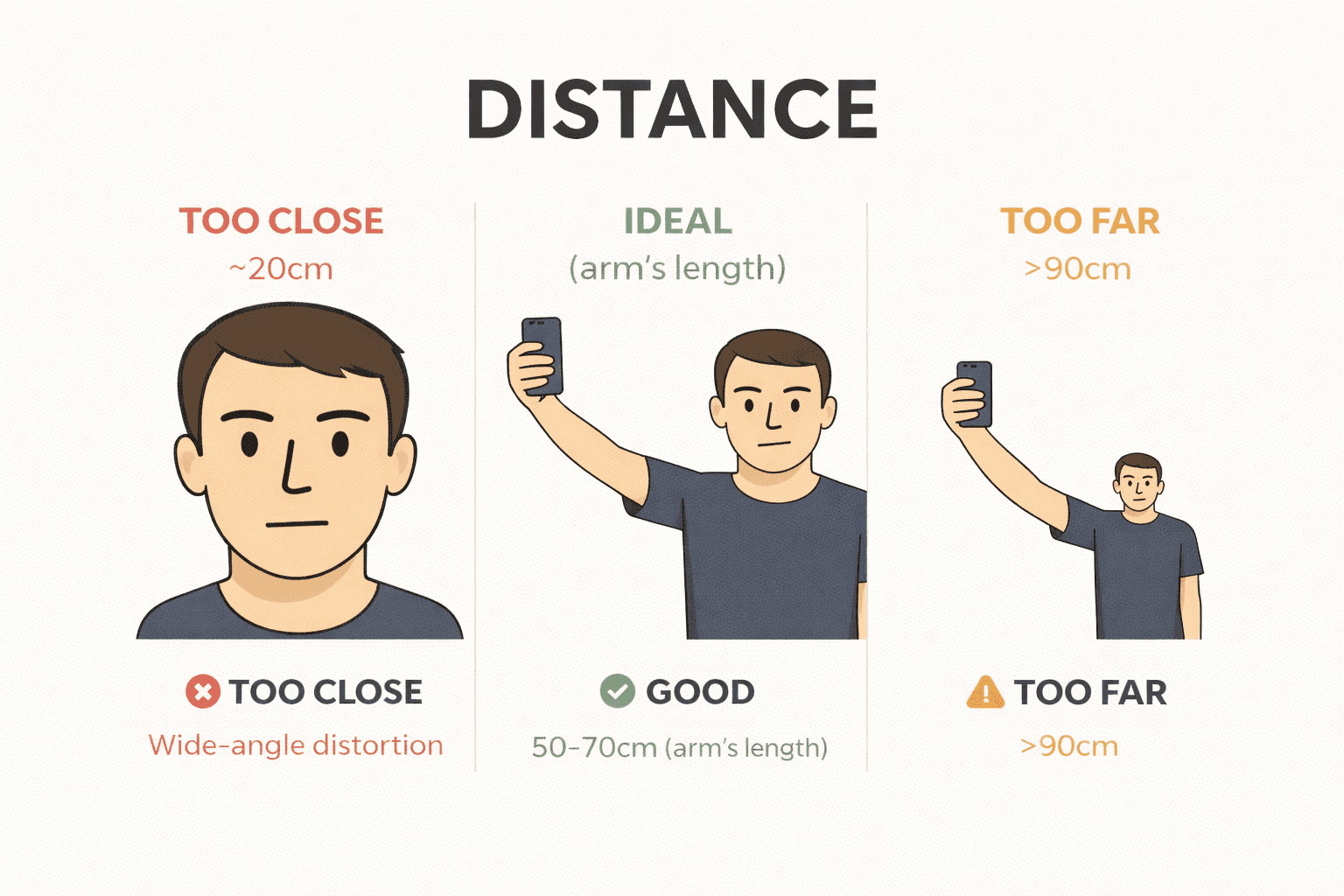
Left: Too close (distortion) • Center: Ideal (50-70cm) • Right: Too far (loss of detail)
Composition#
Composition doesn't affect analysis directly — but it helps you compare before/after photos and keeps your shots consistent.
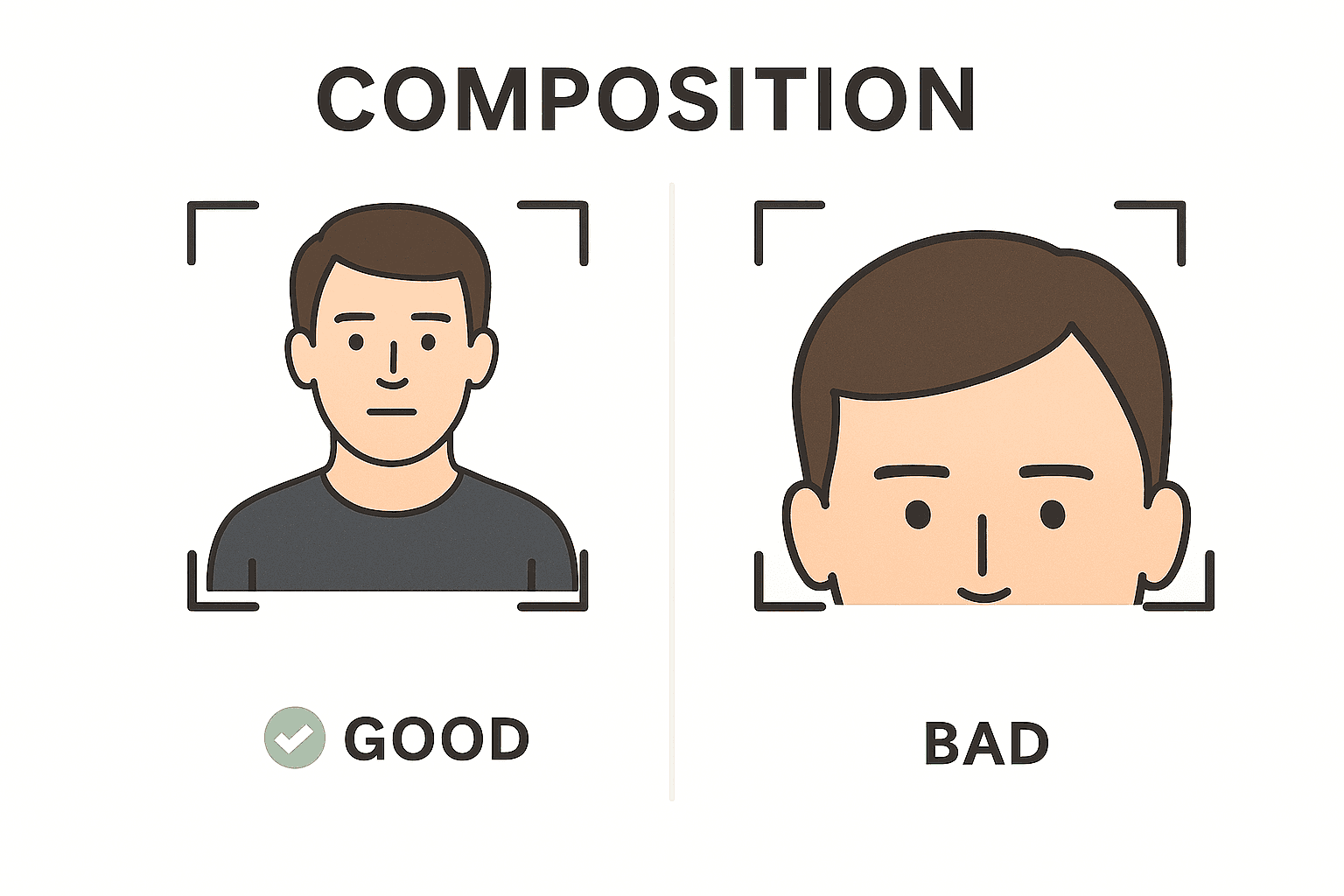
Center your head, keep your forehead visible, and leave a little space above your hairline.
Expression#
Your expression affects jaw tension, cheek prominence, eyebrow height, and perceived symmetry.
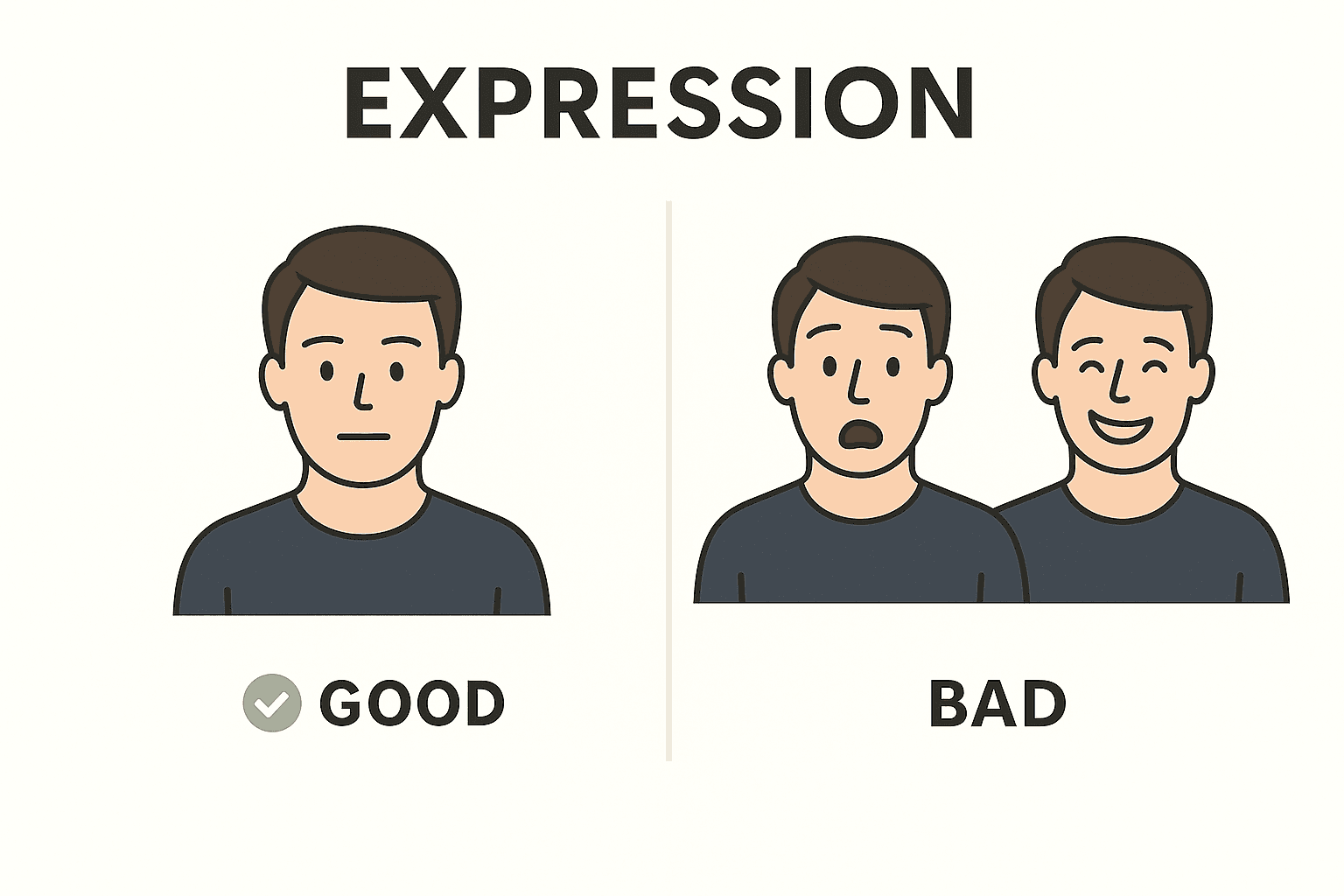
A neutral face gives the most consistent evaluation — no smiling, no raised eyebrows, no tension.
Goal: Relax everything — eyes, forehead, lips, jaw.
Lighting#
Lighting doesn't "break" detection, but it affects how clearly your contours appear. Soft, frontal lighting works best.
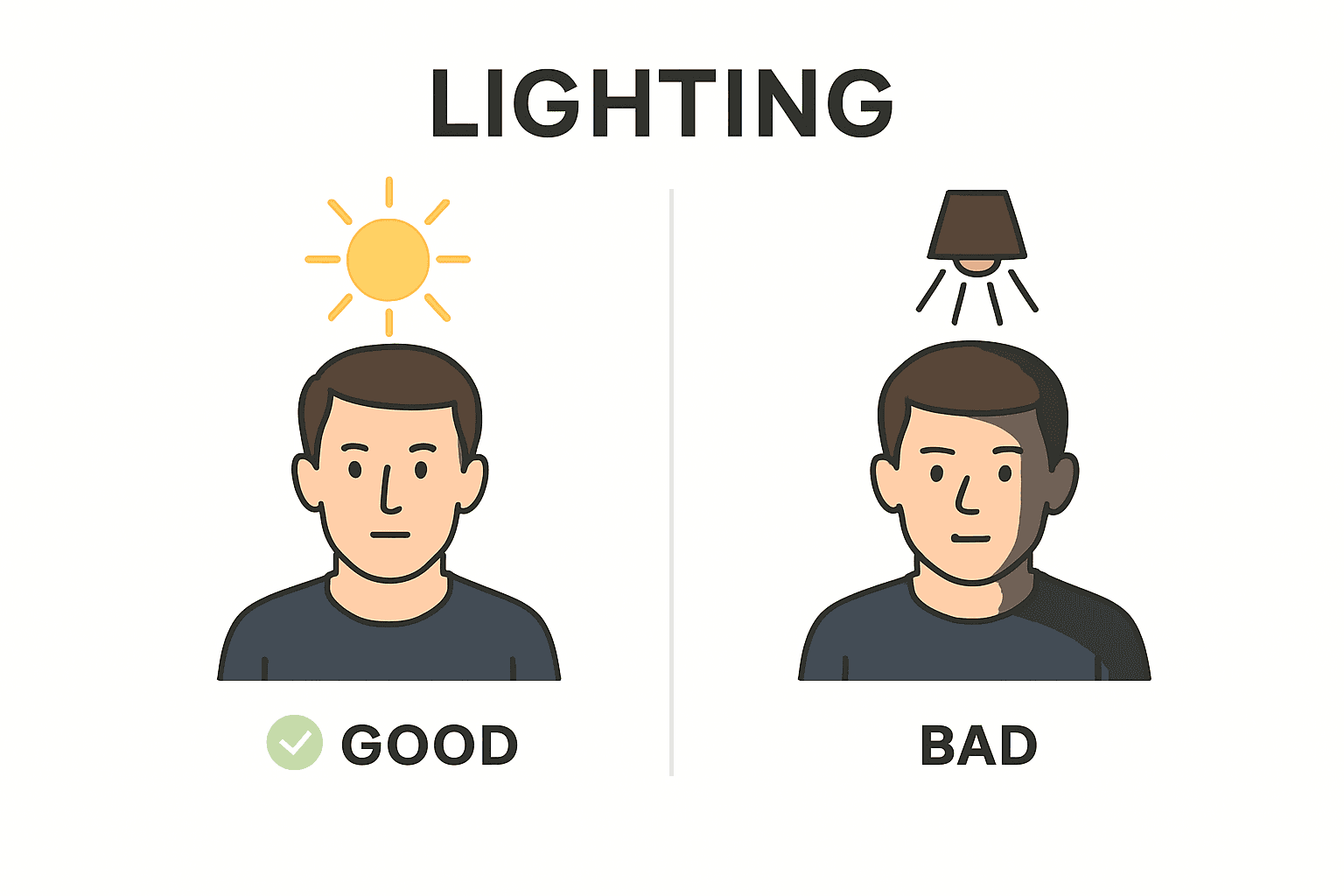
Face a window or soft light. Overhead lighting creates shadows that distort features.
- Soft window light
- Overcast daylight
- Diffused ring light
- Ceiling lamps
- Harsh shadows under the eyes or jaw
Background#
The model ignores most backgrounds — but a clean background makes it easier for you to evaluate your face.
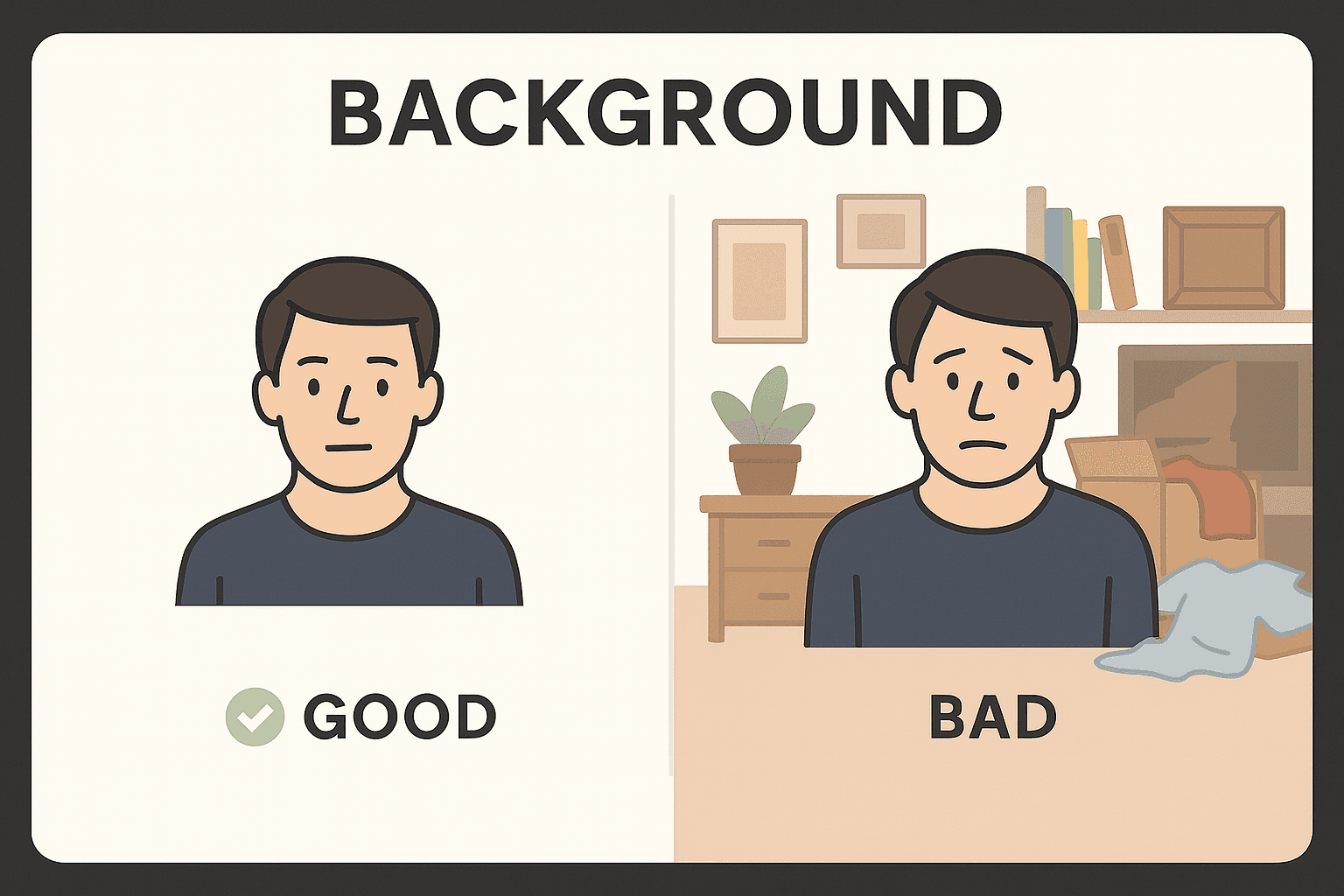
Clutter doesn't confuse the model, but it distracts the human eye.
Good: blank wall, curtain, door
Mid: simple room
Bad: messy room, clutter
Final checklist
| Requirement | Importance | Status |
|---|---|---|
| Straight head angle | ⭐⭐⭐⭐⭐ | |
| Camera at arm's length (50-70cm) | ⭐⭐⭐⭐⭐ | |
| Neutral expression | ⭐⭐⭐⭐ | |
| Camera at eye level | ⭐⭐⭐⭐ | |
| Soft lighting | ⭐⭐⭐ | |
| Clean background | ⭐⭐ |
Frequently Asked Questions#
- How far should the camera be from my face?
Keep the camera about arm's length away (50-70cm / 20-28 inches). This is the optimal distance for accurate facial proportions without distortion.
- Should I smile in a face analysis photo?
No — a neutral face gives the most consistent measurements. Smiling changes jaw position, cheek prominence, and eye shape.
- Can I use my phone selfie camera?
Yes, but hold it at arm's length and use 1x zoom. Avoid ultra-wide selfie lenses as they distort facial proportions.
- Does lighting affect facial symmetry detection?
Lighting affects how your features appear to the human eye, but core symmetry remains. However, harsh shadows can distort visual balance.
- What lens is best for face photos?
Use the standard 1x lens on your phone. Ultra-wide (0.5x) distorts features, especially nose and jaw.
- How do I avoid wide-angle distortion?
Hold the camera at arm's length (not close to your face), use 1x zoom instead of wide-angle, and keep the phone level with your eyes.