


Included free
Your preview
- Overall face score
- Strongest visible feature
- Main improvement priority
Restoring your saved analysis…
Checking your payment and restoring your results. No need to upload another photo while this loads.
Private AI face analysis · free preview
Understand visible facial structure from one front-facing photo. Get a free face score and strongest-signal preview; explore category explanations and measurements in the optional paid report.
No account or credit card required.
Free preview first. Paid reports are optional, one-time purchases.
Core analysis runs in your browser. Photo privacyMethodology
Private face scan
Upload one clear, front-facing photo. You will see your free preview before deciding whether you want more detail.
Upload now — we will guide you through the next step.
Best results: front-facing, neutral expression, good lighting.
🔒 Private: core analysis stays on your device. Your photo is shared only if you separately opt in to an eligible AI photo feature.

Example framing only, not a target look.
For the best results:
Results are based on facial metrics, proportions, and symmetry.
Need more details? See FAQ
What you get
Understand your face, see personalized styling ideas, and get a practical plan for what to try first.
Included free
Optional · one-time purchase
Full & Advanced · analysis, styling & a plan
Discover your strengths, know what to focus on, and see personalized styling ideas on your own photo. Your report connects the analysis to changes you can try.
See your free result first. The complete plan and AI previews come with a paid Full or Advanced report. One payment, no subscription.
See what’s inside the reportAI images are optional and need your permission. Examples are illustrative; real styling results depend on your texture, coverage and upkeep.
AI-generated demo · example subject
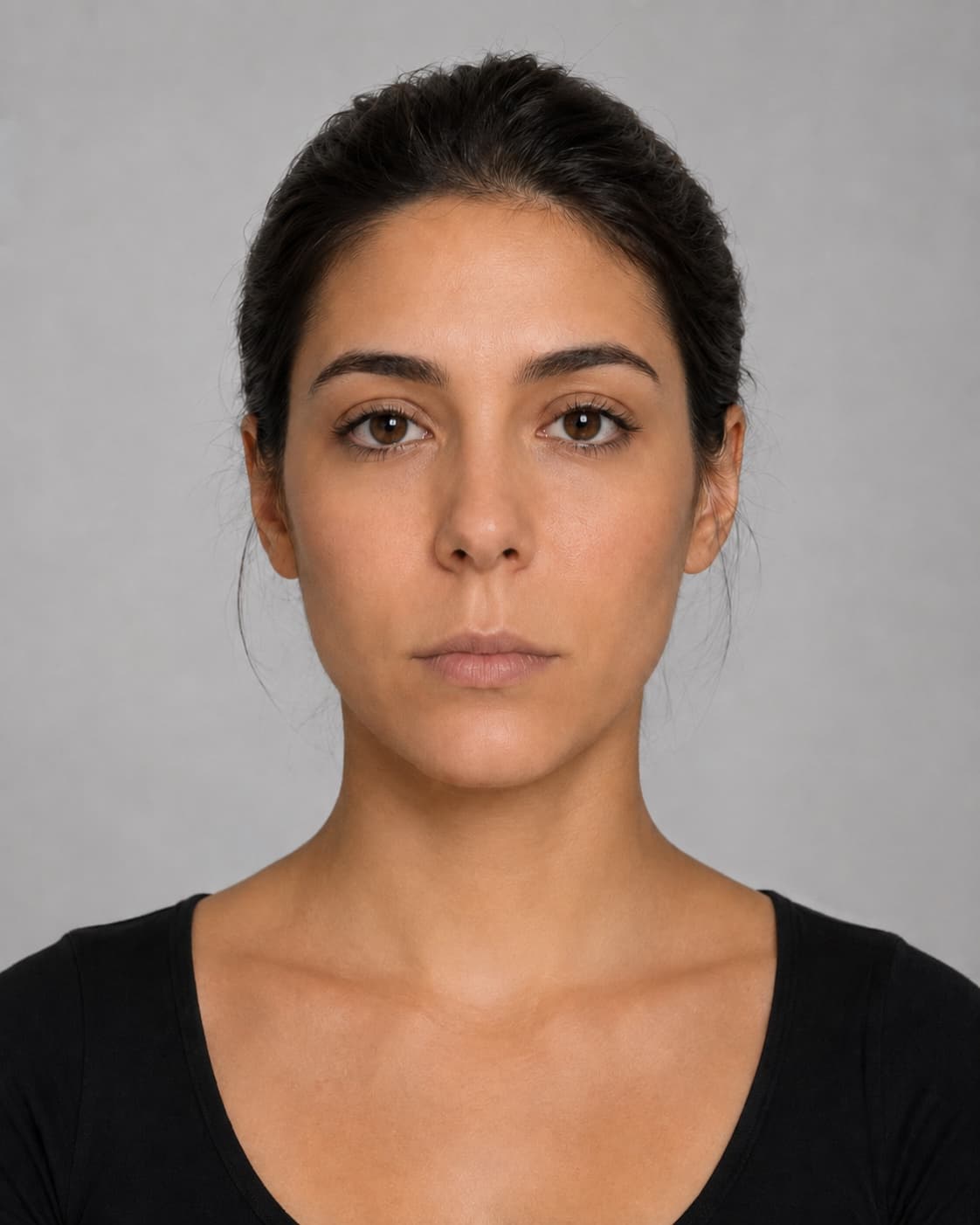

Your report explains the recommendations; the optional AI preview brings them together on your photo. Illustrative example; actual results may differ.
Early user feedback
Review our scoring method before trying your own photo.
Detected my facial asymmetry surprisingly accurately - I already knew one side looked slightly different in photos.
I bought it mostly out of curiosity and didn’t expect the report to be very useful, but it was actually not bad. I liked the ‘View Ratio Insights’ option.
Results definitely depend on lighting and camera angle, so using a clear front-facing photo matters.
Honestly, not bad. The scores didn’t feel random to me, and the advice was mostly practical.
I wouldn’t treat it as some life-changing thing, but as a quick overview of what stands out and what could be improved, it’s useful.
Tried another face analysis tool before, but this one felt more balanced and reasonable for the price.
Some advice was pretty basic, but a few points were genuinely useful, and the score didn’t feel random or overly harsh.
Straightforward process and quick results. The advice felt valid at first glance, especially the haircut suggestion.
My girlfriend was even happier than me because she had already told me to change my haircut too many times - so guys, be careful 🙂
AI face analysis
Your face score summarizes the facial signals measured in one photo across jawline, symmetry, eyes, cheekbones, and proportions. Your selected goal and photo quality can affect the result.
The score is a photo-based estimate of facial harmony. It is not a percentile or a fixed judgment of your attractiveness, identity, or personal value.
The 0-100 score summarizes measured evidence from a photo. Read it alongside photo confidence and feature explanations; a small change in the total does not identify a specific improvement or predict a styling result.
Lookmax Analyzer evaluates 500+ facial data points from a single front-facing image. It maps facial landmarks, derives structural measurements, and summarizes an estimated face score across five key categories: jawline, symmetry, eyes, cheekbones, and proportions.
This AI facial analysis helps explain visible structure and measurement confidence. For the most consistent results, use a clear, neutral, front-facing photo with similar lighting each time.
Step 1
Upload a clear, neutral, front-facing photo.
Step 2
The app estimates landmark geometry in-browser.
Step 3
Get a free face score, strongest signal, and photo confidence. The optional paid report adds category explanations and practical guidance.
This tool is for:
Not a medical or diagnostic tool. Scores are estimates based on image geometry.
Upload one clear, front-facing photo and get your free face score preview.
No account or credit card required
Optional paid reports are one-time purchases. See plans
Explore a specific measurement, learn how to interpret feedback, or choose a practical starting task with the looksmaxing starting guides.