

Oval
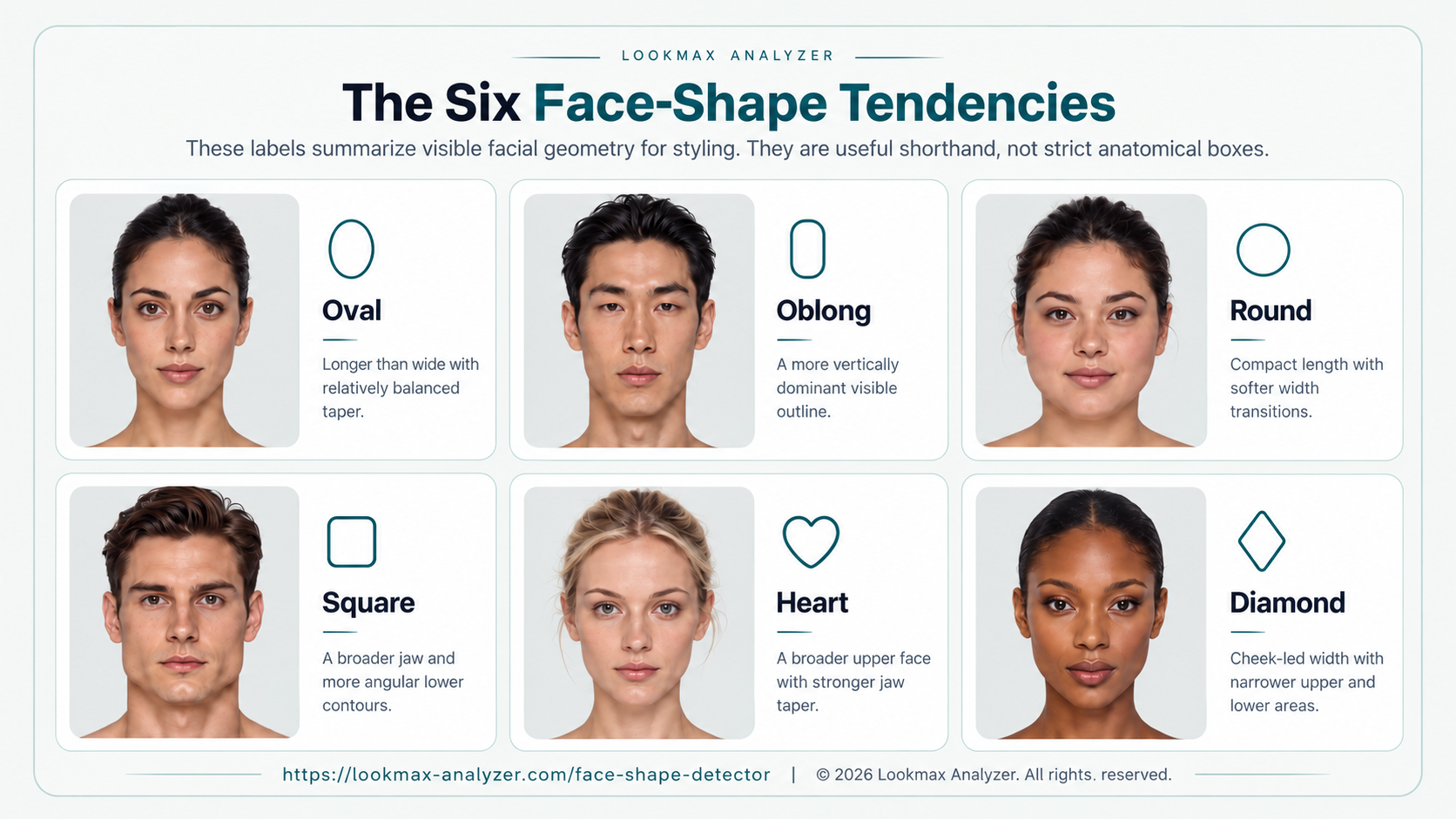
Longer than wide with relatively balanced taper.
Keep your forehead, cheeks, jaw, and chin visible so their relative widths and length can be compared.
Drag and drop your photo here
or choose a file below
JPG, PNG, WebP or HEIC · Up to 30 MB
Best results: face forward, neutral expression, hair away from the outline.
🔒 Private: core analysis stays on your device. Your photo is shared only if you separately opt in to an eligible AI photo feature.

Example framing only, not a target look.
For the best results:
Results are based on visible face length, forehead, cheekbone, jaw, and chin geometry.
Need more details? See FAQ
The detector compares visible face length, forehead and cheekbone width, jaw taper, chin width, lower-face height, and jaw angle with six calibrated styling profiles.
It returns a primary and secondary tendency because face shape is continuous: many real faces combine characteristics of more than one category. Low-confidence or unstable photos are labeled instead of being forced into a definitive result.
Map
Facial landmarks locate the visible forehead, cheeks, jaw, and chin.
Compare
Relative lengths, widths, taper, and angles are compared with six profiles.
Interpret
You receive two tendencies, confidence, measured cues, and a styling start.
These labels summarize continuous geometry for styling. They are useful shorthand, not strict anatomical boxes or rankings.
Attribution does not grant reuse rights. Read the image reuse terms.
Longer than wide with relatively balanced taper.
A more vertically dominant visible outline.
Compact length with softer width transitions.
A broader jaw and more angular lower contours.
A broader upper face with stronger jaw taper.
Cheek-led width with narrower upper and lower areas.
Start with the widest visible area, then use length and jaw contour to separate profiles that can initially look similar.
| Shape | Length | Widest area | Lower face | Useful cue |
|---|---|---|---|---|
| Oval | Longer than wide | Cheekbones, gently | Balanced taper | No single width dominates |
| Oblong | Clearly length-led | Widths feel similar | Relatively straight | Vertical outline dominates |
| Round | More compact | Cheeks | Soft and curved | Few sharp transitions |
| Square | Moderately compact | Cheeks and jaw | Broad and angular | Jaw width stays prominent |
| Heart | Usually longer than wide | Upper face | Strong chin taper | Forehead leads the outline |
| Diamond | Usually longer than wide | Cheekbones | Narrower toward chin | Cheek width clearly leads |
Compare overall elongation and the side outline.
Oval usually tapers more gradually; oblong stays longer and visually straighter through more of the face.
Look at the jaw corners rather than cheek fullness.
Round has softer transitions; square retains width through a more angular lower face.
Identify whether the upper face or cheekbones lead.
Heart is upper-face-led; diamond is cheekbone-led with narrower areas above and below.
Visible face height relative to cheekbone width.
Forehead and upper-face width relative to the cheeks.
Jaw and chin width relative to the cheekbones.
Jaw angle and lower-face geometry around the corners.
Shape classification uses the same geometry for everyone. Gender and goal only personalize the optional styling direction and report.
If pose, contour visibility, or perspective is unstable, the detector asks for another photo without consuming the free result.
A mirror or straight portrait can provide a rough self-check. Use the same visible landmarks as the detector rather than hairstyle volume.
The detector estimates visible geometry from a two-dimensional photo. It reports primary and secondary tendencies because many faces sit between simplified shape profiles.
Head turn, close-lens perspective, expression, lighting, and hidden contours can change the result. Unstable photos are rejected instead of being forced into a category.
Core face-shape analysis runs in your browser. Optional AI photo reviews, styling previews, and hairstyle try-ons share your photo with an AI service only after you opt in.
Full & Advanced · analysis, styling & a plan
Discover your strengths, know what to focus on, and see personalized styling ideas on your own photo. Your report connects the analysis to changes you can try.
See your free result first. The complete plan and AI previews come with a paid Full or Advanced report. One payment, no subscription.
See what’s inside the reportAI images are optional and need your permission. Examples are illustrative; real styling results depend on your texture, coverage and upkeep.
AI-generated demo · example subject
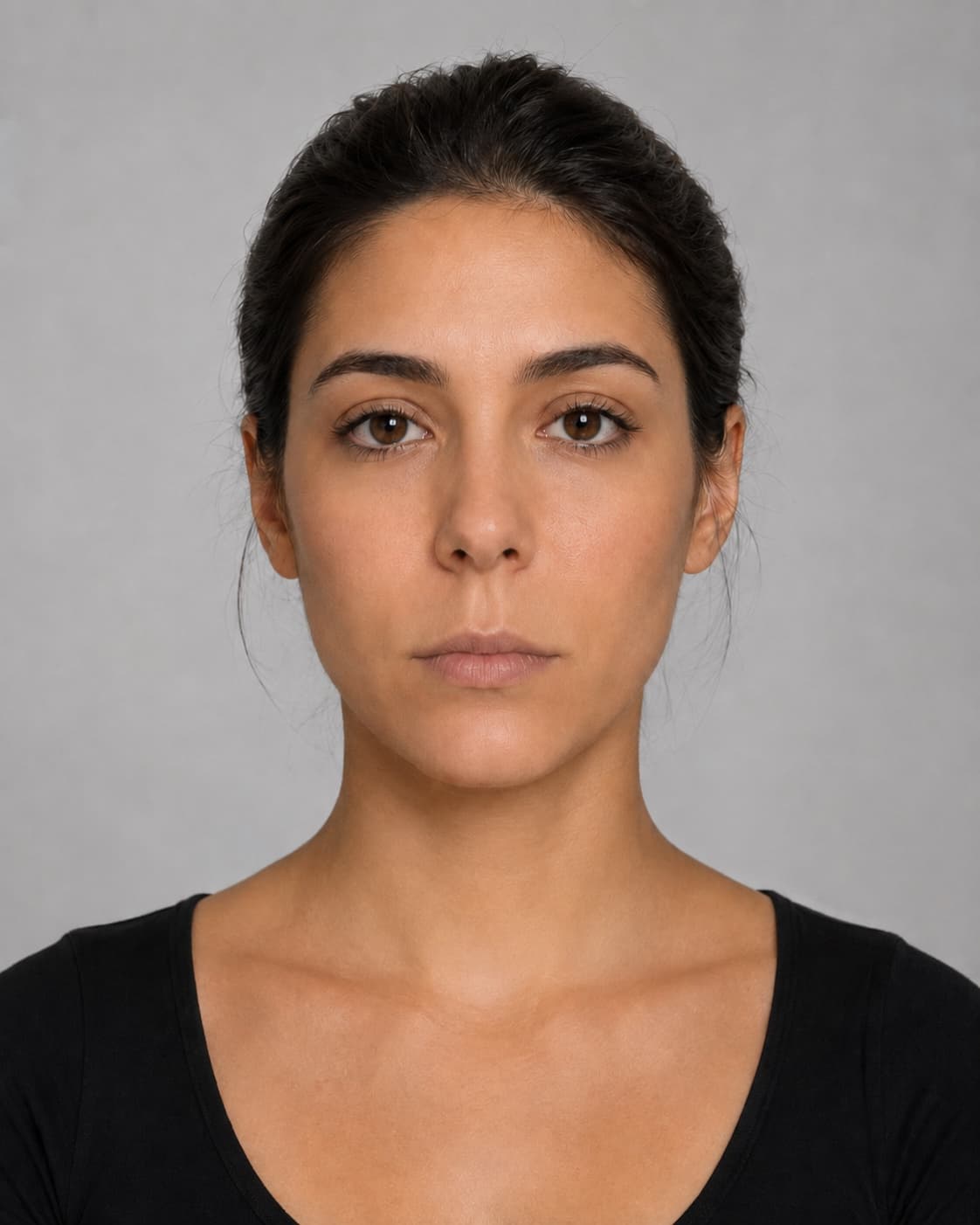
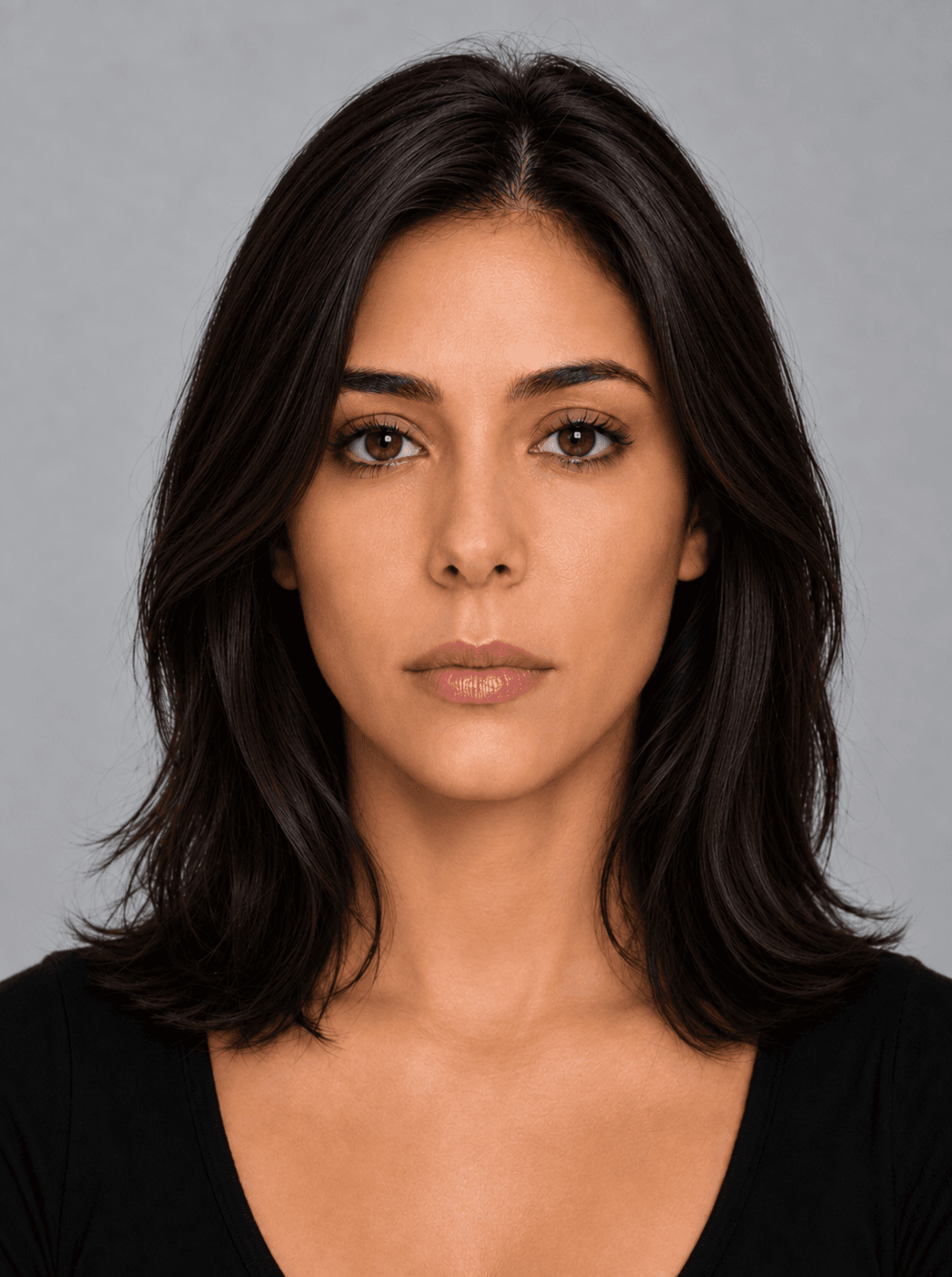
Your report explains the recommendations; the optional AI preview brings them together on your photo. Illustrative example; actual results may differ.
These are visual-balance starting points, not rules. Hair texture, density, hairline, presentation goal, and personal preference can matter more than a shape label.
Preserve the existing balance or emphasize the feature you like most.
Consider: Very tall, narrow styling can make an already long outline feel more vertical.
Explore side volume, texture, or a fringe that visually interrupts length.
Consider: Concentrating all volume at the crown can exaggerate vertical length.
Explore controlled height, asymmetry, and cleaner lines around the cheeks.
Consider: Maximum width at cheek level can reinforce the most compact part of the outline.
Use texture or layering to soften the jaw—or clean lines to emphasize it.
Consider: A blunt shape ending exactly at the jaw can add more lower-face width.
Explore chin-level balance, side movement, or a softer fringe.
Consider: Extra width focused only at the temples can overemphasize the upper face.
Balance the cheekbones with softness near the forehead or jaw.
Consider: Strongest volume directly at cheek level can exaggerate the widest point.
Use a level, front-facing photo with a neutral expression and the forehead, cheeks, jaw, and chin visible. The detector compares visible length, widths, taper, and jaw angle with six broad face-shape profiles.
The detector compares oval, oblong, round, square, heart, and diamond tendencies. Because real faces often sit between categories, it reports both a primary and secondary tendency.
It is a photo-based styling estimate, not a clinical measurement. A straight pose and visible outline improve consistency, while close-lens distortion, head turn, expression, and hair coverage can change the result.
No. The geometric classification uses the same six profiles for everyone. Your selected presentation goal can affect the styling direction, but it does not change the measured shape tendency.
Underlying structure is relatively stable, but weight, aging, facial hair, hairstyle, expression, and camera setup can change the visible outline. Compare results using similarly framed photos.
Both are longer than wide. Oblong faces have a more vertically dominant outline and often straighter-looking sides, while oval faces usually show a gentler, more balanced taper toward the jaw and chin.
Both can look relatively compact and broad. Round tendencies have softer side and jaw transitions, while square tendencies show a broader lower face and more angular jaw corners.
Heart tendencies are led by a broader upper face that tapers toward the chin. Diamond tendencies are led more strongly by the cheekbones, with both the upper and lower face appearing narrower.
It can provide a useful starting point for visual balance, but it is not a rule. Hair texture, density, hairline, facial features, personal style, and the effect you want all matter alongside face shape.
No face-shape category is inherently better. Overall appearance depends on proportional balance, individual features, expression, styling, and context rather than which of the six shorthand labels is closest.
Ready to find your closest face-shape tendencies?
Use one clear front-facing photo. No account required.