
What does facial thirds mean?
Facial thirds divide the face vertically into upper, middle, and lower sections to understand proportion balance.
Quick answer
Facial thirds compare the forehead area, midface, and lower face. Balanced thirds can make a face feel more proportionate, but perfect equality is not required.
Lookmax Analyzer may discuss thirds as an educational proportion guide, not as a rigid beauty rule.
Visual guide
Diagram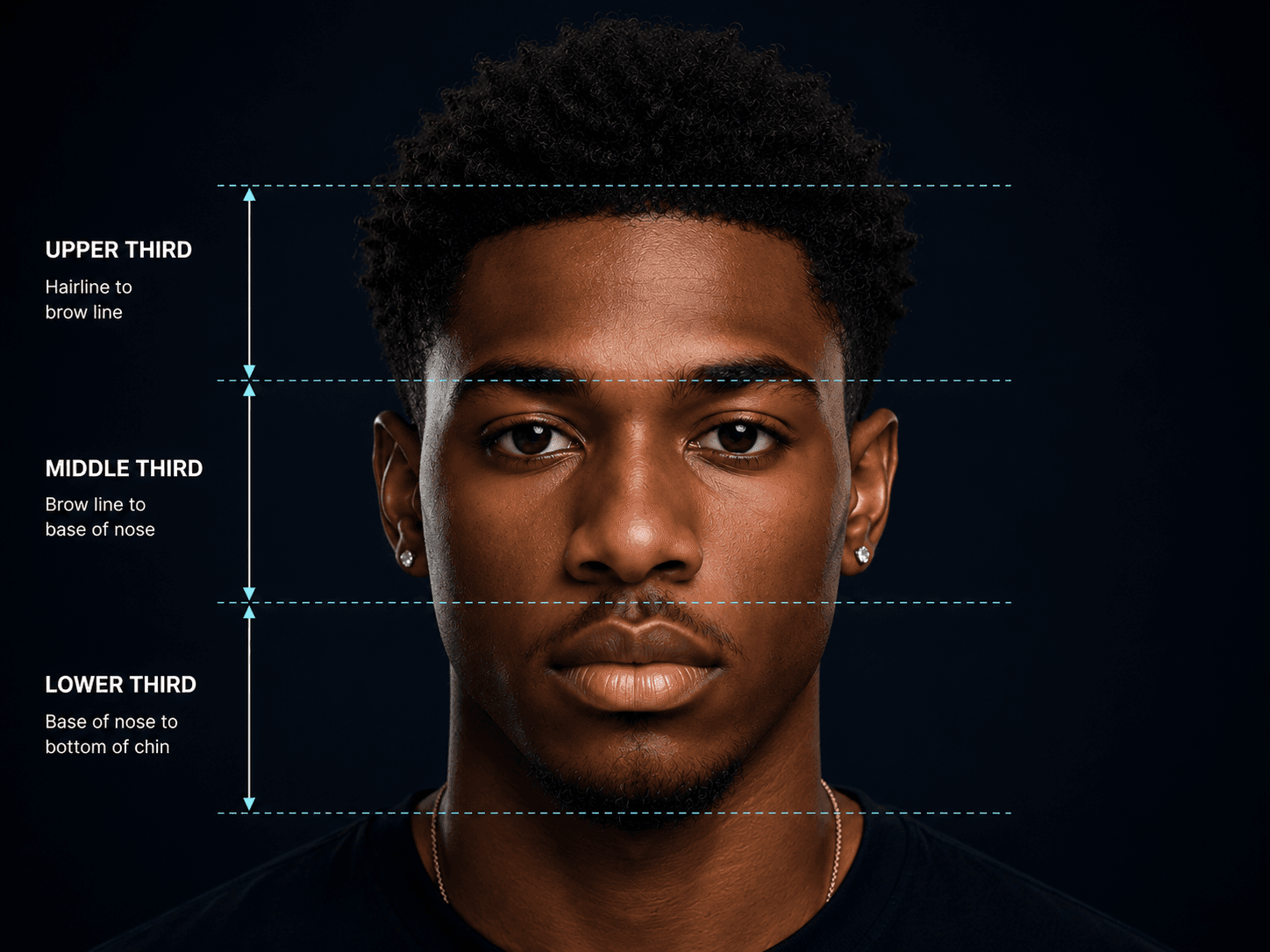
Meaning
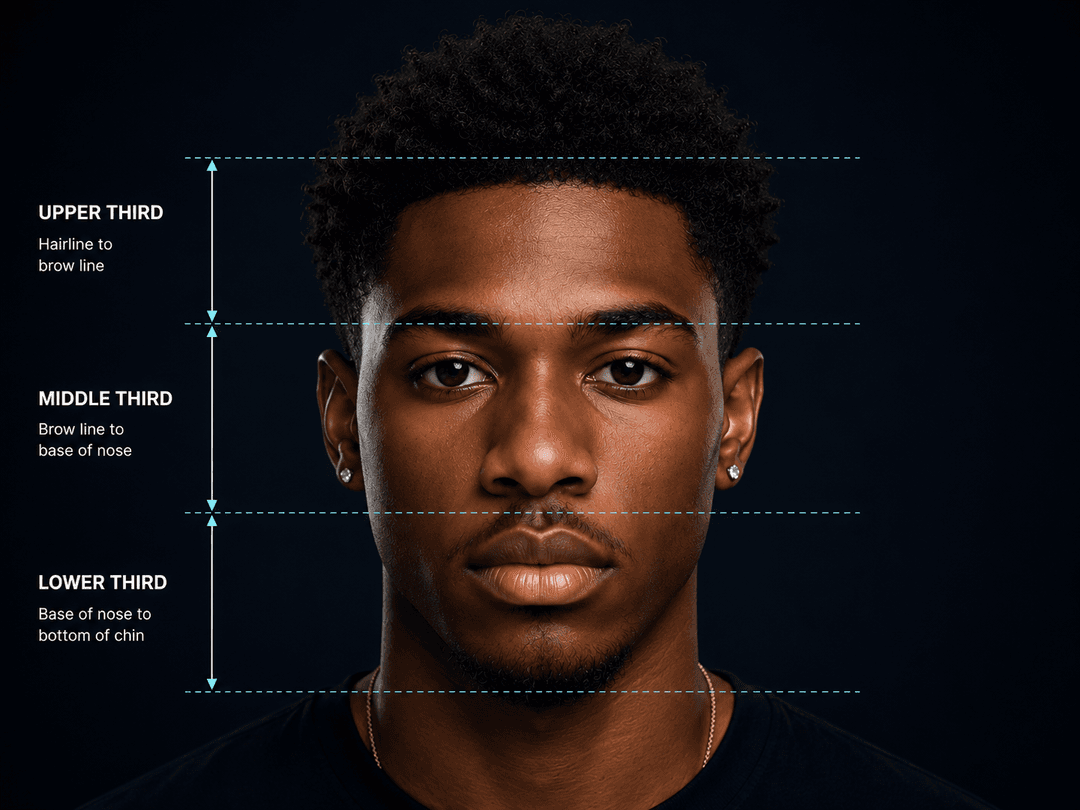
The common guide divides the face from hairline to brow, brow to base of nose, and base of nose to chin.
This framework helps explain why a long midface, short lower third, recessed chin, or tall forehead can change the overall impression.
It is a helpful visual guide, not a strict rule. Hairline, expression, ethnicity, age, and camera angle can all affect how thirds appear.
Why it matters for appearance
Visual explanation
These are simplified educational diagrams using abstract, anonymous faces. They are not medical measurements or celebrity comparisons.
Midface zone
Diagram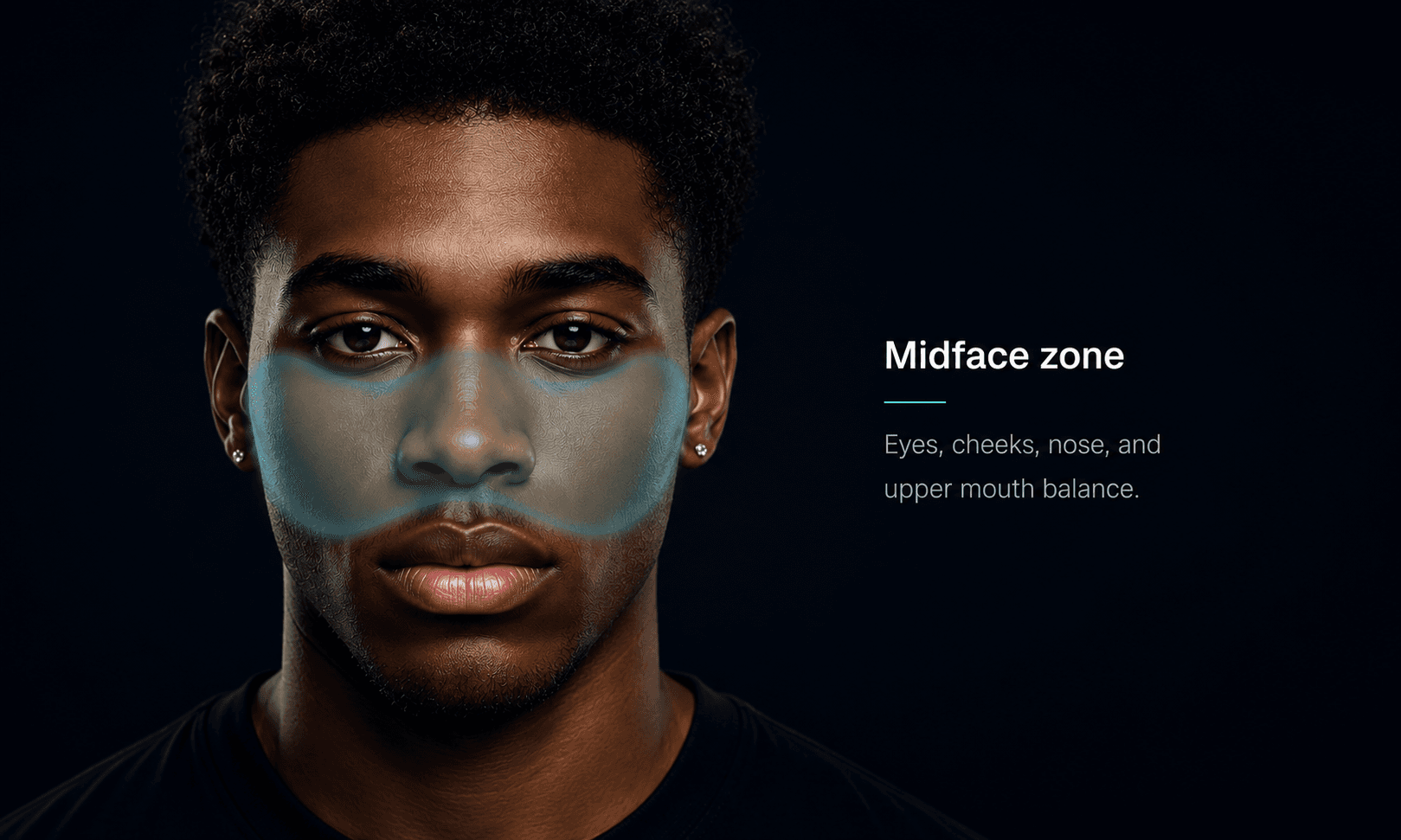
Chin projection
Diagram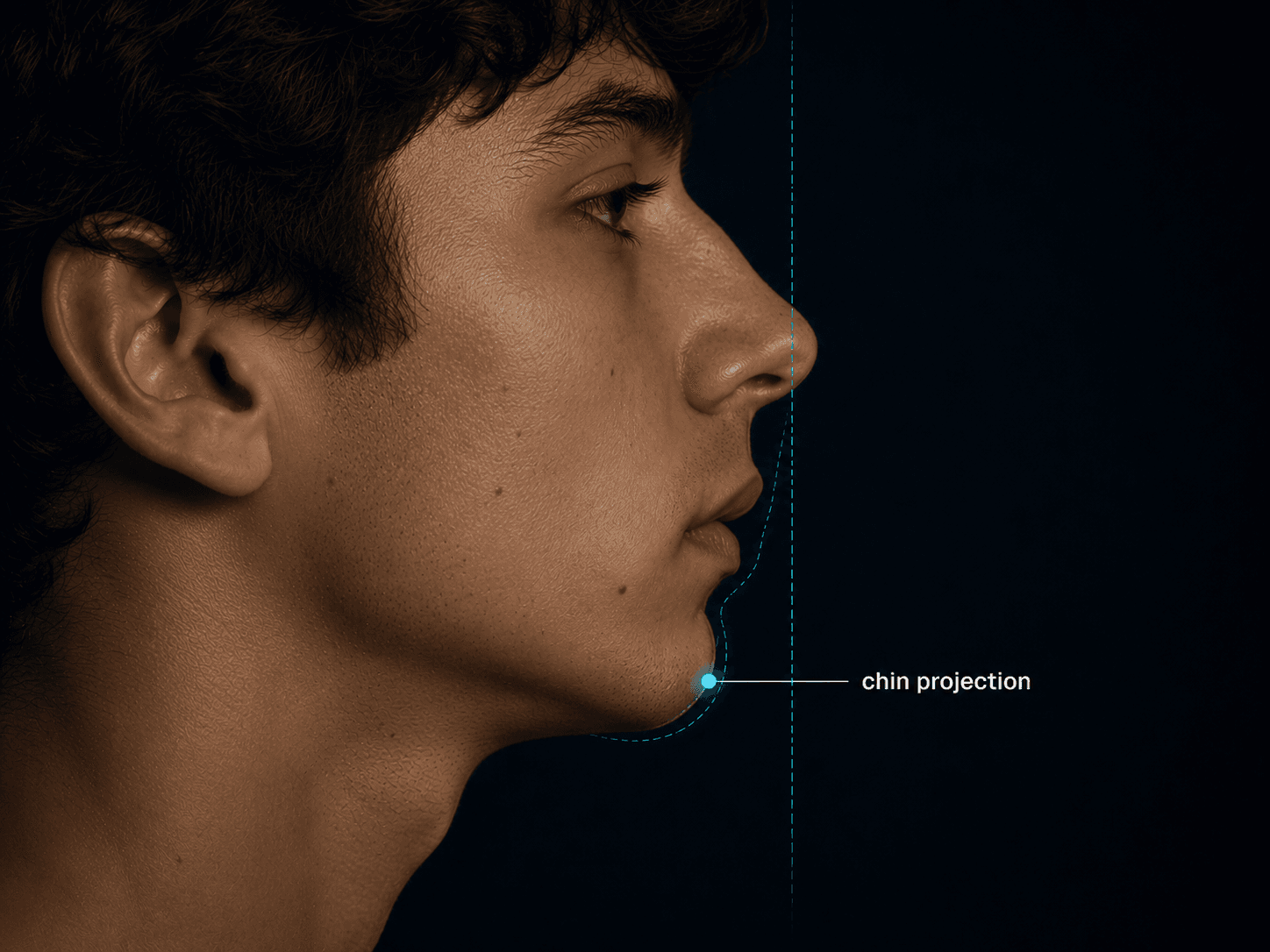
Common misconceptions
All three facial thirds must be exactly equal.
Small variation is normal. Balance and fit matter more than exact mathematical equality.
Facial thirds can be judged from any picture.
Camera angle, hairline visibility, head tilt, and expression can distort the proportions.
One third determines attractiveness.
Thirds are only one part of the full face, alongside symmetry, structure, skin, and feature harmony.
Related terms
Contextual face analysis
See how this applies to your face
Run a private AI face analysis to check your facial harmony, jawline, proportions, eye area, and strongest/weakest features.
Report preview
facial thirds
Frequently asked questions
What are the three facial thirds?
They are commonly described as hairline to brow, brow to base of nose, and base of nose to chin.
Do facial thirds need to be equal?
No. Equal thirds are a guideline. Real attractive faces often have small variations.
Can hairstyle affect facial thirds?
Yes. Hairline visibility, volume, and forehead framing can change how the upper third appears.