
Facial Symmetry Explained: A Guide to Balanced Features
3 min read
By Lookmax Analyzer Team — Mar 20, 2026
Facial Symmetry Explained: A Guide to Balanced Features
Facial symmetry is one aspect of overall facial harmony. While features like jawline definition, cheekbone structure, eye proportions, and skin quality also matter, symmetry plays a notable role in how balanced a face appears. This guide covers what symmetry means, how it's measured, and practical ways to work with your features.
What Is Facial Symmetry?#
Facial symmetry refers to how closely the left and right sides of your face match. It's a way of measuring how evenly features are distributed across the vertical centerline.
Perfect symmetry is exceptionally rare. Most faces have some degree of natural asymmetry, and this is completely normal.
Lookmax Analyzer evaluates symmetry across multiple facial landmarks:
- Eyes — position, size, and level of each eye
- Eyebrows — shape, position, and arch
- Nose — alignment and deviation from center
- Mouth — cant (angle) and alignment
- Jaw — subtle differences between left and right sides
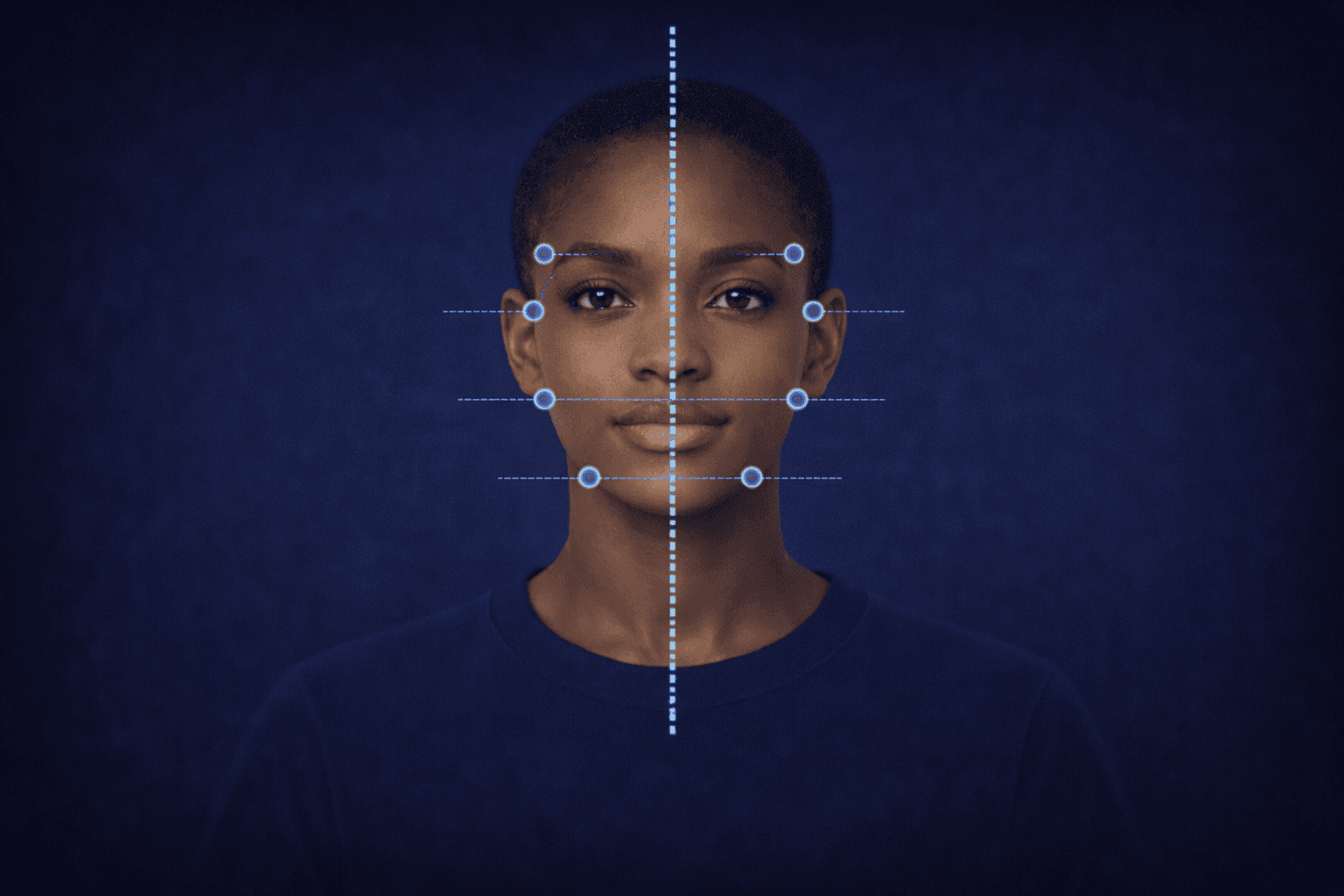
Key facial landmarks analyzed for symmetry
Symmetry tends to draw attention, which is why it's a foundational concept in facial aesthetics.
Symmetry and Attractiveness#
Symmetry is often discussed in attractiveness research, but it's important to understand its context:
What Research Shows
Some studies suggest facial symmetry may signal developmental stability, which is why symmetry is associated with attractiveness across many cultures. However, this is just one factor among many.
The Bigger Picture
Attractiveness is multidimensional. Feature definition, proportions, skin quality, expression, and overall harmony all contribute. A face with slight asymmetry but strong features and healthy skin can be just as attractive as a more symmetrical one.
Perfect symmetry isn't necessarily more attractive — it can actually appear unnatural. Subtle asymmetries give faces character and uniqueness.
Focus on overall facial harmony rather than achieving mirror-image symmetry. Balance across all features matters more than identical left and right sides.
Static Symmetry vs Perceived Symmetry#
An important distinction often overlooked: the symmetry measured from a facial photo isn't the same as how symmetry is perceived in real life.
Static Symmetry
This is what Lookmax Analyzer measures — the alignment of facial landmarks in a neutral, front-facing photo with even lighting. It captures your structural symmetry at a specific moment.
Perceived Symmetry
How symmetrical you appear to others is influenced by many factors beyond structural symmetry:
- Angle — faces look different from various viewpoints
- Expression — smiling or talking changes how features align
- Lighting — shadows can emphasize or minimize asymmetry
- Hairstyle — hair frames the face and affects perceived balance
- Camera distortion — lenses can warp features near the edges
Your perceived symmetry in daily life may differ from your measured symmetry. Both are valid — they just capture different aspects of how you look.
How Lookmax Analyzer Evaluates Symmetry#
Our AI analyzes multiple facial features and calculates how closely they mirror each other:
- Horizontal alignment — how level features are relative to each other
- Size differences — relative size differences between left and right features
- Position differences — distance of features from the facial center line
- Angular differences — cant or tilt of features like eyes and mouth
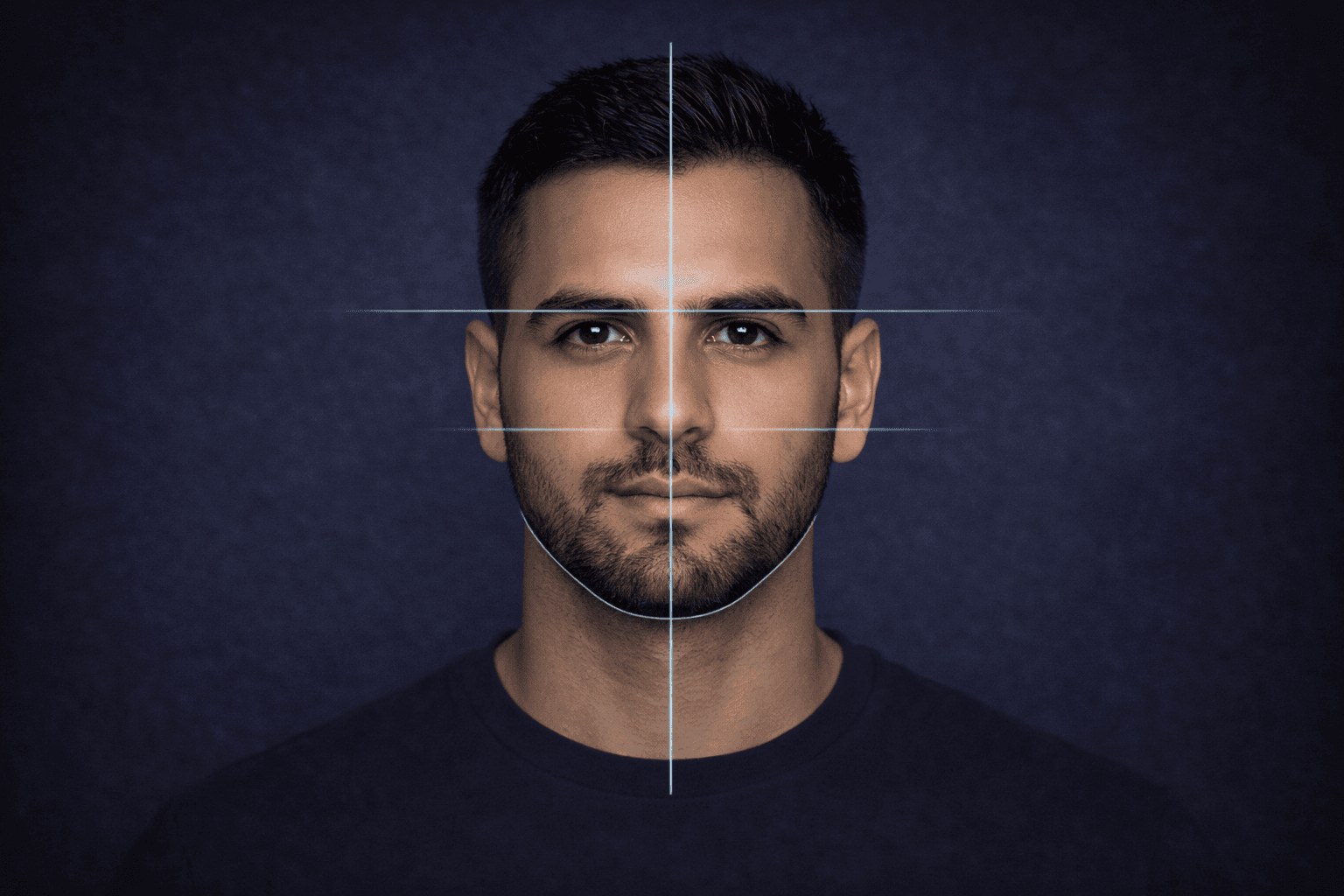
How symmetry is measured across facial features
Each feature pair is scored individually, then combined into an overall symmetry score on a 0–100 scale. Analysis is most accurate with a neutral expression, front-facing angle, level head position, and even lighting.
The symmetry score is a simplified summary of several measurements. It captures structural alignment but doesn't represent attractiveness directly. A balanced approach to all facial features matters more than any single score.
Types of Facial Asymmetry#
- Eye asymmetry — one eye may be slightly larger or positioned differently
- Eyebrow asymmetry — differences in shape, arch, or position
- Nose deviation — the nose may curve slightly to one side
- Mouth cant — the mouth may tilt slightly when smiling
- Jaw asymmetry — subtle differences in jawline between sides
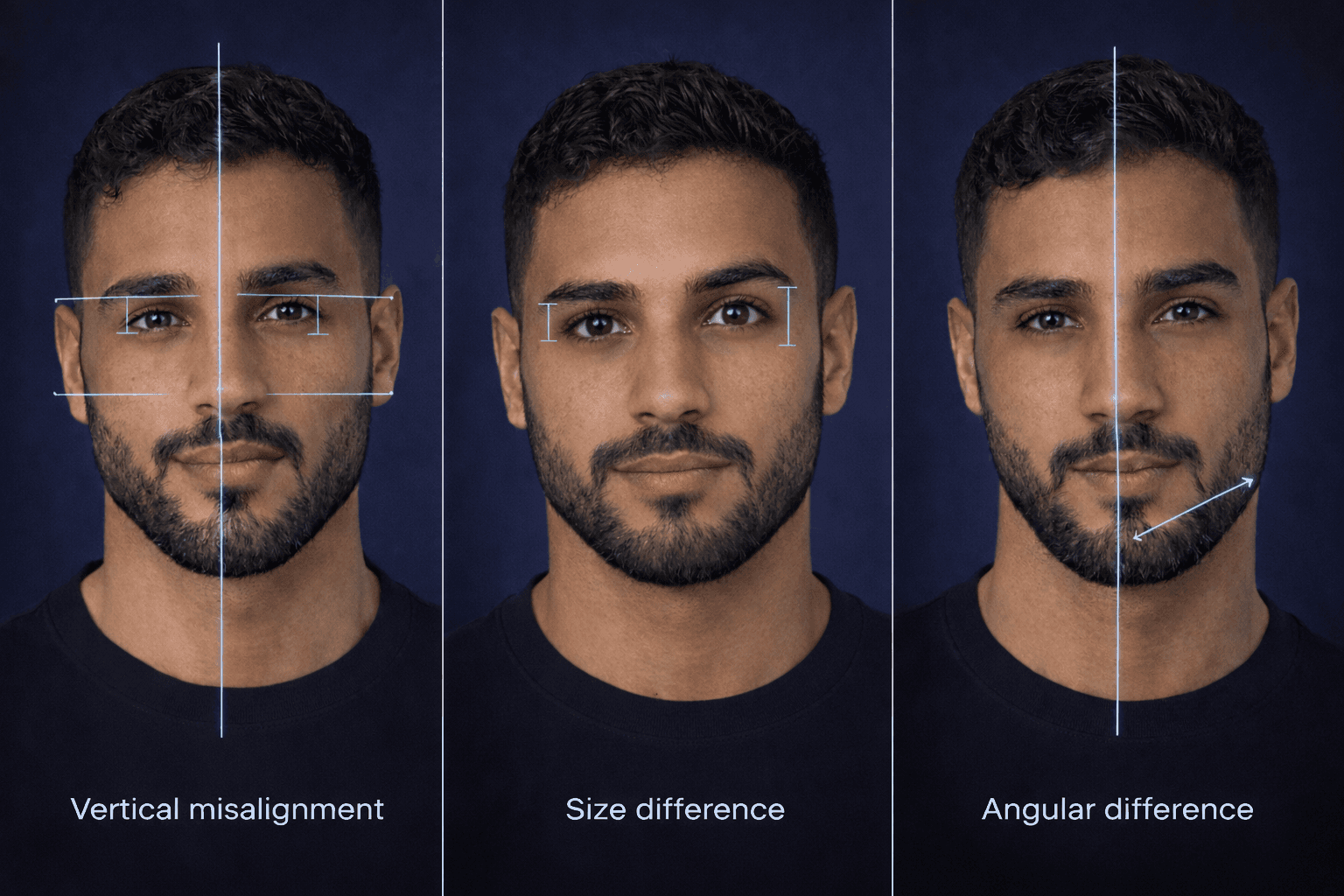
Common types of facial asymmetry
Most people have at least minor asymmetry in one or more features. Complete bilateral symmetry is exceptionally rare in nature.
Enhancing Facial Balance#
Several approaches can improve perceived symmetry without changing bone structure:
1. Hairstyle
The right hairstyle can frame your face in a way that enhances visual balance. Asymmetrical styles or strategic volume can draw attention away from minor imbalances.
2. Grooming
Well-maintained eyebrows that are shaped to complement each other can significantly improve perceived balance. For those with facial hair, consistent grooming on both sides creates a more polished look.
3. Makeup
Strategic makeup techniques like eyebrow mapping and subtle contouring can create the illusion of greater balance. Results are temporary but work well for photos and events.
4. Photography Setup
How you position yourself in photos affects how balanced you appear:
- Face head-on — center your face directly facing the camera
- Level your head — keep your eyes and shoulders level
- Even lighting — symmetrical lighting minimizes shadows that highlight asymmetry
Small asymmetries are part of what makes each face unique. Focus on enhancing your natural balance rather than trying to achieve perfect mirror symmetry.
Frequently Asked Questions#
- Is facial symmetry important for attractiveness?
- Symmetry is one factor among many. While studies show it can contribute to perceived attractiveness, features like definition, proportions, skin quality, and overall harmony matter just as much. Many faces with subtle asymmetry are considered highly attractive.
- Can facial asymmetry be addressed?
- Grooming, makeup, and hairstyle can all improve perceived balance. These approaches work with your existing structure to enhance how symmetrical you appear. Surgical options exist for those seeking permanent changes, but many asymmetries are natural and don't require correction.
- Why do I look more symmetrical in some photos?
- Camera angle, head position, lighting, and lens distortion all affect how symmetrical you appear. Head-on positioning with even lighting shows your structural symmetry most accurately. Expression and hairstyle also influence perceived balance.
- Does facial expression affect symmetry analysis?
- Yes. Smiling, talking, or tilting your head can change how features align in a photo. For the most accurate analysis, use a neutral expression with your face level and facing directly forward.
- What symmetry score is considered good?
- Higher scores reflect closer alignment between left and right facial features. However, minor differences are completely normal. The score captures structural alignment, not attractiveness directly.
- Do eyebrows affect symmetry score?
- Yes. Eyebrow position, shape, and level are among the features analyzed. Well-groomed, balanced eyebrows can improve both your measured symmetry and perceived balance.
Sources#
- PubMed (PMID: 28155897): Predictors of facial attractiveness and health in humans
- PubMed (PMID: 26441352): Individual Aesthetic Preferences for Faces Are Shaped Mostly by Environments, Not Genes
- PubMed (PMID: 22096491): Facial attractiveness ratings from video-clips and static images tell the same story
Ready to Analyze Your Facial Symmetry?
Get your symmetry score and personalized tips based on your facial features.